
Oxfam: Israeli government continues to block humanitarian aid despite ICJ call
The international community chooses to limit itself to sea corridors and air routes instead of challenging Israel's systematic prevention of full-scale humanitarian aid.
"We believe that Israel is failing to do everything in its power to prevent genocide."
Sally Abi Khalil, Regional Director Oxfam Middle East and North Africa

A boy stands in his destroyed house in Rafah that was bombed by Israeli forces in mid-February 2024. Around 100 Palestinians were killed in one night in the attack. Photo: Alef Multimedia/ Oxfam
The Israeli government has once again turned down a warehouse full of humanitarian aid that would include, among other things, oxygen, incubators and Oxfam water and sanitation equipment. All this is now in Al Arish, just 40 kilometers away from 2.3 million desperate people in Gaza.
The aid in the warehouse comes from several humanitarian organizations worldwide and has been denied entry to Gaza for weeks and months as a result of an arbitrary system of approvals and inspections basically controlled by the Israeli government.
In a new report Oxfam notes that this suspension of aid is just one example of how Israel has made humanitarian work so dangerous and dysfunctional that it is impossible for organizations, despite enormous efforts, to work at the pace and capacity needed to save lives.
Oxfam says the Israeli government is ultimately responsible for the collapse of humanitarian aid in Gaza, failing to live up to its legal responsibilities to the people whose land it occupies and violating one of the International Court of Justice's (ICJ) key calls to increase humanitarian aid to Gaza given the risk of genocide.
Oxfam says that unless Israel immediately stops its attacks, the death toll will be far beyond the current 31,000 from disease and starvation.
"The ICJ's call should have prompted Israeli leaders to change course, but since then conditions in Gaza have actually worsened. The fact that other governments have not challenged Israel hard enough, choosing instead to use less effective methods such as air and sea corridors, is a huge red flag. It shows that Israel continues to undermine full-fledged support."
Sally Abi Khalil, Oxfam Regional Director for the Middle East and North Africa.
"The government of Israel not only fails to facilitate the efforts of international humanitarian aid but actively prevents it. We believe that Israel is failing to do everything in its power to prevent genocide."
Sally Abi Khalil, Oxfam Regional Director for the Middle East and North Africa.
Oxfam's report "Inflicting Unprecedented Suffering and Destruction" shows seven crucial examples of how Israel actively prevents humanitarian aid from entering Gaza, thus penalizing all Palestinians living in Gaza by deliberately depriving them of life and security.
The report shows that Israeli authorities:
-
- Only letting aid in through two crossings in Gaza - those at Rafah and Karm-Abu Salem/Kerem Shalom, although they have the possibility to open more. This creates a bottleneck effect for aid and trade that could be avoided.
-
- Leads a dysfunctional and under-resourced system of inspection that makes humanitarian aid stagnant and subject to repetitive and unpredictable bureaucratic procedures. This contributes to trucks getting stuck in huge queues of 20 days on average.
-
- Routinely and arbitrarily denying entry into Gaza for humanitarian aid, based on the claim that it has a "dual military use". Vital items essential for a full humanitarian response, such as fuel, generators, protective equipment and communication kits are banned altogether. Much of the denied aid has to go through a complex system of "prior authorization" and ends up in limbo in the Al Arish warehouse in Egypt.
-
- Has cracked down on humanitarian missions, isolating large parts of northern Gaza and restricting international humanitarian workers' access not only to Gaza but also to Israel and the West Bank, including Jerusalem.
Israel has allowed 15,413 trucks into Gaza in the 160+ days of war. Oxfam says the population of Gaza needs five times more than this to meet even basic needs. In February, Israel allowed 2,874 trucks to enter which is a 44% decrease compared to the month before.
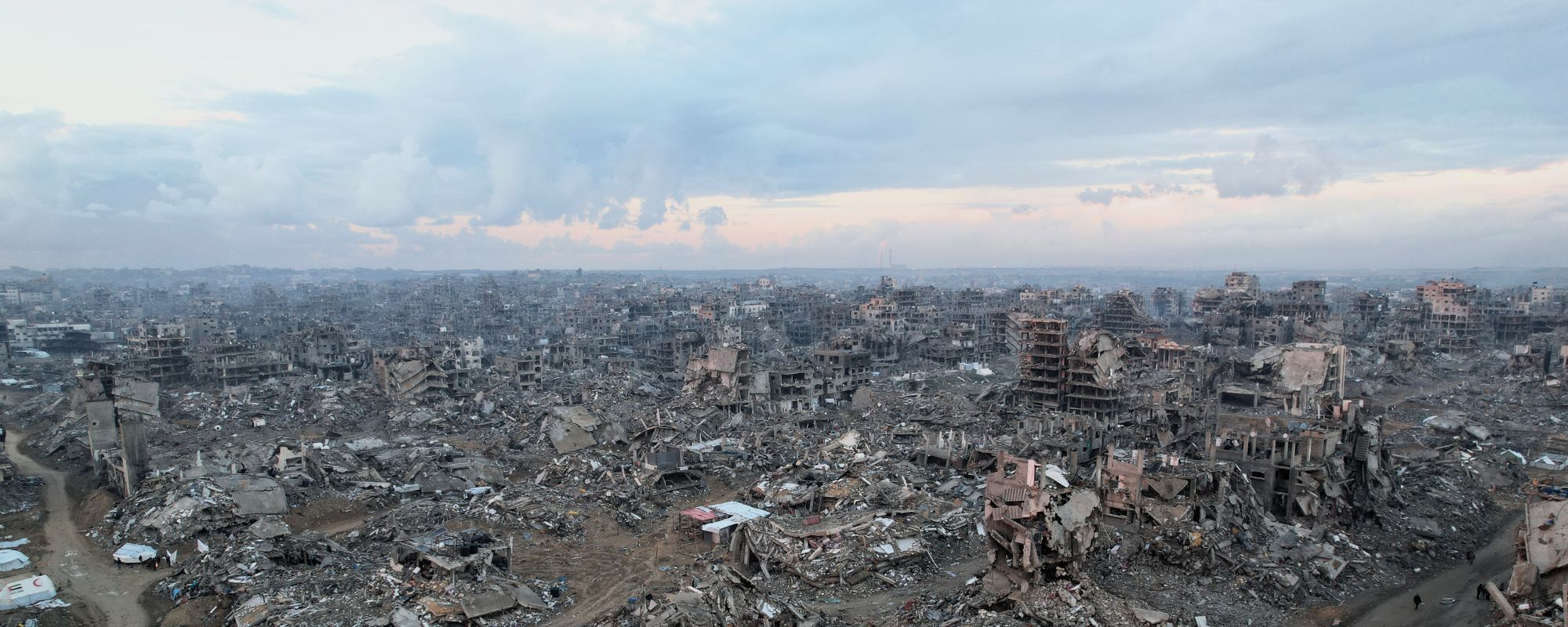
Israel's actions also undermine international support through continued military attacks inside Gaza, which are unprecedented in terms of intensity, brutality and scope. Even Israeli leaders have called it a "total siege".
-
- Israel's attack has trapped Gaza's own humanitarian workers and organizational partners inside a "virtually uninhabitable" environment of mass displacement and vulnerability, where 75% of all solid waste is dumped in random locations, 97% of groundwater is undrinkable, and where the Israeli state uses starvation as a weapon.
-
- Israel has ensured that there are no safe havens in Gaza amid the massive and frequent displacement of almost the entire population, making systematic support unsustainable.
-
- Their attacks are disproportionate and indiscriminate against both civilian and humanitarian assets and people, such as solar, hydropower, energy and sanitation plants, UN buildings, hospitals, roads, and humanitarian aid convoys and warehouses, even when these assets are reportedly "excluded as military targets" after their coordinates are shared for protection.
"The State of Israel has created the perfect storm for a humanitarian collapse and only the State of Israel can fix it."
Sally Abi Khalil, Oxfam Regional Director for the Middle East and North Africa.
"Juuzor has been overwhelmed by the support from all over the world, but we are so frustrated by our helplessness and inability to actually get enough aid into Gaza. In the first weeks, we managed to collect what we could from the local markets. Now there is almost nothing - no resources, no supplies. In northern Gaza, the situation is beyond dire. There has been an alarming increase in child malnutrition in the last month, and yet the food our team manages to find to feed people in 45 shelters is just a few vegetables. There is an irrefutable, contrived and deliberate withholding of aid that continues to suck the life out of all humanitarian organizations, including our own."
Celine Maayeh, Advocacy and Research for Juzoor For Health and Social Development, one of Oxfam's partner organizations in Gaza
Oxfam is calling for an immediate and unconditional ceasefire to stop the killing and suffering as efforts to protect or support civilians are not working. Armed Palestinian groups must unconditionally release civilian hostages. Displaced people must be allowed to return safely to their homes.
Other states are obliged to use all necessary diplomatic, economic and political tools to prevent a genocide in Gaza, to allow for more humanitarian aid and to prevent the risk of Palestinians being forcibly displaced outside Gaza. States should stop selling arms and other forms of security services that would increase the risk of genocide, ongoing war crimes and crimes against humanity committed by Israel against Gaza.
Oxfam says Israel's 16-year illegal blockade has already left Gaza in a vulnerable state.
"The international community has failed both Palestinians and Israelis by ignoring the root causes of this decades-long conflict. It is overwhelmingly clear that there is no military solution to this, it only exacerbates the cycle of violence."
Sally Abi Khalil, Oxfam Regional Director for the Middle East and North Africa.
"Israel must lift its total blockade of Gaza and its aggressive occupation of Palestinian territories and we finally call on all parties to work towards a just and lasting peace between Israelis and Palestinians based on international law."
Sally Abi Khalil, Oxfam Regional Director for the Middle East and North Africa.
Länken är kopierad