

Swedish government, demand a permanent ceasefire!
The letter to the Swedish government
Swedish government, demand a ceasefire now!
For too long, the international community has watched the deadliest conflict of the 21st century*. A temporary ceasefire began on January 19, 2025 butthe Swedish government must continue to fight for a permanent ceasefire, unhindered access for humanitarian aid andensure justice.
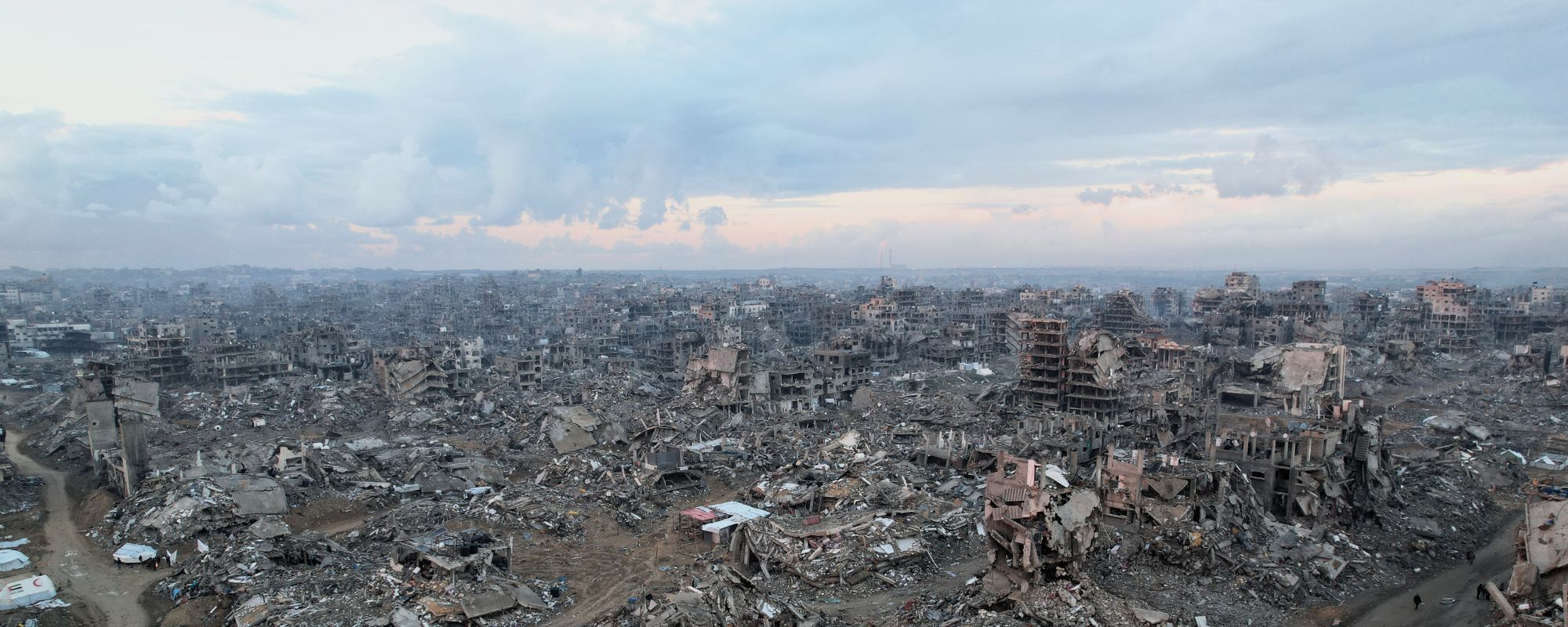
More than 47,000 people have been killed, including 11,000 children. 1.9 million people have been forced from their homes and over 70,000 homes have been destroyed.We cannot look away.
Despite extremely difficult conditions, Oxfam and partner organizations have reached over 1.2 million people in Gaza with food, medicine and hygiene products. But neither we nor other organizations can fully carry out our work without a permanent ceasefire.
Sweden must stand on the right side of history. Swedish government, you have a responsibility. We urge you to do everything you can to establish a permanent ceasefire.The people of Gaza cannot wait.
Questions & answers
On October 7, 2024, we sent over 28,300 signatures to the Swedish government and the Ministry of Foreign Affairs.As long as the situation requires, we will keep our petition open and continuously send signatures to the Swedish government with our demand for a permanent ceasefire. Note that the total number of signatures includes the number sent to the Swedish government on October 7, 2024.
Oxfam welcomes Gaza ceasefire, after over a year of a brutal military campaign and systematic blockage of humanitarian aid, this pause is long overdue. As the initial phase of this agreementsagreement is unfolding, our first and most urgent call is for is the immediate and unhindered entry of humanitarian aid into Gaza. Beyond that, the blockade must be lifted and Israel's violations of international law, including crimes against humanity must not must not go unanswered. Victims must receive justice and future violations must be prevented. The international community must also do everything in its power to ensure that violence does not resume. The way forward must center on justice and accountability. Read our full reaction here.
Oxfam has dozens of We are in constant contact with them, ensuring every day that everyone is alive and safe. That's our most important job, although it's getting harder and harder to guarantee. Most people have been forced to leave their homes - some have lost their homes completely. It is an extremely traumatic and difficult time for everyone in Gaza, with everyone feeling unsafe and insecure, struggling to find shelter, food, water and electricity. Our colleagues are no exception.
The crisis in Lebanon has escalated following the failure to reach a ceasefire in Gaza. Hundreds of thousands of people have been forced to flee their homes due to Israeli air strikes. Oxfam has been working in Lebanon since 1993 and now focuses on supporting these people with water and sanitation services, cash assistance, food and hygiene products. For decades, the people of Lebanon have endured one crisis after another with no chance of recovery.
Oxfam calls on the international community to condemn the escalation and to act to stop it now. Israel must be held accountable for their actions in both Lebanon and Gaza. All parties must comply with international humanitarian law and be held responsible for any violations.
Oxfam has been operating in Gaza and Israel since the 1950s. Therer works Oxfam works with local partners to support people in Gaza affected by the humanitarian crisis there.We are providing clean water, rebuilding damaged water systems and improving sanitation. We support local farmers to improve the quality of their products and get them sold, and we support civil society to fight for the human rights of the people. We campaign for sustainable peace and security for all civilians and an end to the blockade of Gaza.
Attacks that deliberately target civilians are never justified. All parties must respect international humanitarian law and end the violence. Hostage-taking violates humanitarian law and Oxfam condemns all such acts.
Oxfam is on the ground in many countries, and the degree of need determines the response. The decision to bein a crisis is always made on the basis of humanitarian need.. Before the October 7th attacks, 80% of the people in Gaza were dependent on international aid.t support as a result of a 16-year blockade. The Israeli government, local and national organizations have sufficient capacity to meet the needs of its population, which Gaza does not have. Should the situation change Oxfam will review prioritization.
We are deeply concerned and outraged that some of the major donors have suspended support to the United Nations Relief and Works Agency for Palestine Refugees (UNRWA), the leading provider of assistance to Palestinians in Gaza and the region. This abrupt and arbitrary halt snatches away the lifeline for over 2 million people in Gaza, over half of whom are children. It is a collective punishment of an entire population.
This sanctioning of an entire organization based on allegations against a small number of individuals out of 13,000 employees in Gaza, is reckless and irresponsible when the immediate escalation of humanitarian aid is urgent.
We welcome UNRWA's prompt decision to launch an independent investigation by the UN Office of Internal Oversight Services (OIOS), the highest investigative authority in the UN system. We strongly urge countries to reconsider their funding freeze, as the lives of over two million people in Gaza depend on this support.
UNRWA has over 800 facilities including schools, shelters and homes where displaced Palestinians are currently seeking shelter in Gaza.
*Based oncalculations made by Oxfam in January 2024. The number of deaths per day has been calculated from official data.
It was estimated that 250 Palestinians were killed per day which is higher than in any other recent major armed conflict, compared to Syria (96.5 deaths per day), Sudan (51.6), Iraq (58.8), Ukraine (43.9), Afghanistan (23.8) and Yemen (15.8).
Supplement after January 19
On January 19, 2025, a temporary ceasefire came into force, after 15 months of relentless attacks by the Israeli military. During these months, tens of thousands of Palestinians have been killed in Gaza. A 6-week ceasefire can be a breathing space for all those affected, but only a permanent ceasefire can lead to peace.
Israel has systematically used starvation as a weapon of war, forcibly displacing and deliberately depriving Palestinians in Gaza of everything they need to survive - water, food, medical aid and shelter.
This collective punishment is contrary to international law, as is the indiscriminate killing of civilians. The International Court of Justice has ruled that there is a risk of genocide in Gaza.
The risk of starvation remains throughout Gaza. Israel must now allow sufficient aid to reach all those in need. All Israeli hostages and Palestinian prisoners must be released.
We must raise our voices to ensure that every life - Palestinian and Israeli - is valued. We refuse to be divided or discouraged in our quest for lasting peace, justice and responsibility.