

Starvation looms - people in northern Gaza forced to survive on 245 calories a day
People in northern Gaza have been forced to survive on an average of 245 calories a day - 12% of their daily needs - since January 2024 while the Israeli army continues its military advance. Famine is looming in northern Gaza and almost the entire population lives with extreme hunger.

Mutaz uses the oven they built from clay to make bread. Photo: Alef Multimedia/Oxfam
"Israel is making deliberate choices to starve civilians. Imagine what it's like, not only trying to survive on 245 calories day in and day out, but also having to watch your children or elderly relatives do the same. All while on the run, with little or no access to clean water, knowing that most medical care is gone, and while under constant threat of drones and bombs."
Amitabh Behar, Oxfam International's Chief Executive.
Oxfam's analysis is based on the latest available data from the Integrated Food Security Phase Classifications (IPC) recently published analysis. The amount of food consumed by people in northern Gaza is less than 12% of the recommended daily intake of 2100 calories. Oxfam has also found that less than half of the food trucks needed to reach the target are entering Gaza. In addition, last week the Israeli government told UNRWA, by far the largest aid agency in the area, that their convoys will no longer be allowed into northern Gaza.
Famine is looming in northern Gaza and almost the entire population is living with extreme hunger. 1.1 million people, half of Gaza's population, are expected to live with catastrophic hunger (IPC Phase 5) within 3 months if violence is not de-escalated, according to the IPC. According to the UN, children are already dying of hunger and malnutrition. More than 300,000 people are believed to be still trapped in northern Gaza with no way to leave.
"Before the war we were in good health and had strong bodies. Now when I look at my children and myself, we have lost so much weight. We try to eat whatever we find, edible plants or herbs, just to survive. "
A mother trapped in northern Gaza.
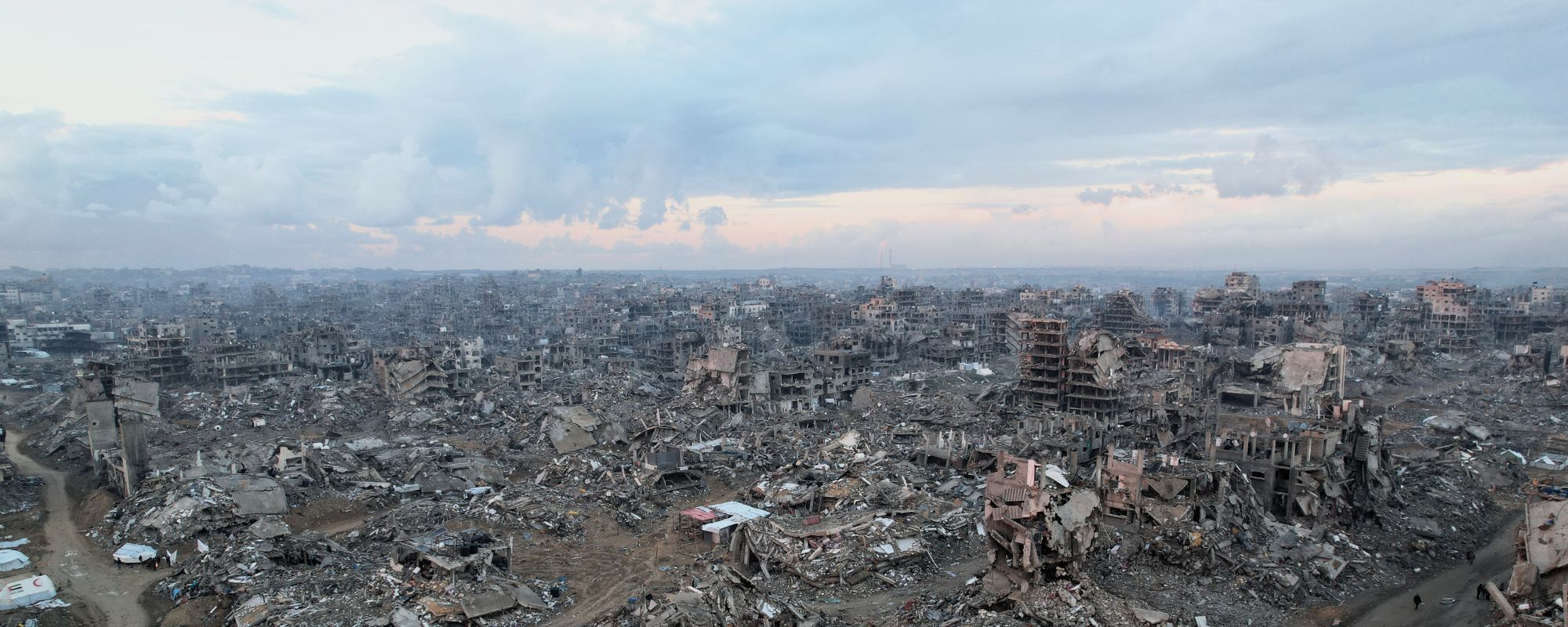
Hunger and its consequences are exacerbated by the near-complete destruction of civilian infrastructure, including hospitals and water and sanitation services, making people even more vulnerable to disease. Beyond the limited access to food, the small amount of fruit and vegetables still available is out of reach for most people due to rising prices.
"Israel is ignoring both the ICJ's call to prevent genocide and the UN Security Council resolution. Just last week, the ICJ ordered new provisional measures as starvation is no longer near, but is now 'entering' Gaza. All countries need to immediately stop supplying Israel with weapons and do everything they can to secure an immediate and permanent ceasefire. Only then can we stop this terrible carnage for the 2.2 million people who have endured six months of suffering. "
Amitabh Behar, Oxfam International's Executive Director. -Read about the ICJ provisional measures here
Oxfam is calling for a permanent ceasefire, the return of all hostages and the release of illegally detained Palestinian prisoners, an immediate end to arms supplies to Israel and the free flow of humanitarian aid. The global response for Gaza must include both sufficient and nutritious food for all, full restoration of hospitals and healthcare, water and sanitation infrastructure, and allowing all materials for reconstruction to cross the border.
-
Oxfam's calculations are available on request.
-
2 100 calories per person is the average daily energy requirement used in the the report from the IPC on March 18. It was calculated by using demographic data taking into account variations in age and gender. The population of Gaza is 2.23 million people.
-
The average daily calorie intake per person in northern Gaza has been calculated using data from the IPC from January 7 to February 20. The average daily calories per person for the whole population of Gaza comes from data from the IPC between October 26 and February 20. The IPC hasnalyzed all documents from trucks of food allowed into Gaza from October 26 to February 20 to estimate the amount of calories per truck and per unit of analysis which was then distributed by area.
-
Oxfam calculated theaverage calories per truckload of food using data from the IPC if all trucks that allowed into Gaza from October 26 to February 20.
-
Data from UNRWA shows that 3,781 trucks of food were allowed to enter Gaza from February 21 to March 27, which on average amounts to 105 trucks per day. This does not include the 301 mixed trucks over the same period - 8 trucks per day - which may have included food. Based on thedaily need for 2 100 caloriesspread over the 2.2 million population, the estimatede Oxfam that at least 221 trucks of food are needed every day.
-
In October 2012, the Israeli government was forced, after a long legal battle led by the Israeli human rights organization Gisha, release Food Consumption in the Gaza Strip - Red Lines. The document included information on the principle of limiting the introduction of food into Gaza, which was policy between 2007 and 2010, and calculated the exact amount of calories and weight of various basic food items needed by Gaza residents.they based on age and gender, to avoid malnutrition.
-
THE UNITED NATIONS and other organizations have reported that children are dying of starvation in Gaza.
Länken är kopierad