Seamstresses cannot live on their wages
Textile production is the largest export industry in Bangladesh. The sector accounts for 85% of the country's export earnings and provides jobs for 4.4 million people. 80% of them are women. The minimum wage in the textile industry is $896 a month, but estimates show that textile workers need well over double that, at least $2,379 a month, to earn enough to live a decent life, known as a living wage.
Sabina's story
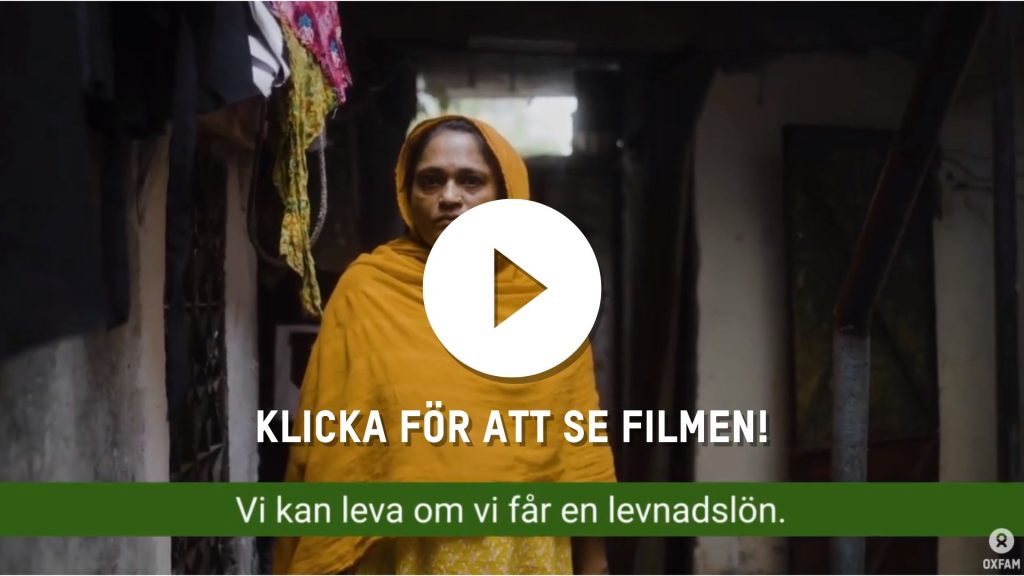
Sabina Yesmin in the video above is one of the women who is paid far too little for her work. She has been working in the textile industry for 12 years and is the sole provider for three children. She sews and cuts collars for sweaters and is expected to produce 2000 collars per day. With her salary of SEK 935 per month, she has nothing left over after paying her bills and sending money to the children who live with her parents. She also can't afford education for her three children.
"When I get sick, I take a loan and get treatment. Then I have to pay back the loan when I get my salary. I suffer."
Sabina Yesmin
"Because of the demands of reaching the quota, I can eat sometimes, and sometimes not. It is difficult to drink water and go to the toilet. They take advantage of me if I don't meet the quota. It happens to everyone."
Sabina Yesmin

Sabina knows that they need to get a higher salary.
"We can live if we get a living wage. Otherwise it will be difficult for us and we cannot survive."
Sabina Yesmin
She has a message for anyone buying clothes made in Bangladesh:
"I want to thank them for happily wearing our clothes. We rejoice in their joy. They should stand with us, allow us to work, and if we get a higher wage we will be happy."
Sabina Yesmin

The "What She Makes" campaign
75 million women work in the textile industry, but only 2% of them receive a living wage. We want to change that.
Oxfam's 'What she makes' campaign demands that big clothing companies pay a living wage to the women who make their clothes. Together, with our allies and Oxfam's direct contact with companies, we are calling on garment companies to create a fairer and more equal garment industry.
Länken är kopierad