

New Oxfam report: one step closer to a living wage for farmers
Small-scale farmers grow a third of the world's food. With commodities such as rice, coffee and cocoa, the figures are even higher - up to 90%. Yet most of them live in poverty, with incomes that are insufficient to pay for healthcare or food. Oxfam today released a report, 'Price Interventions as Part of Living Income Strategies', which outlines one way food companies can play their part in helping farmers earn a living wage.
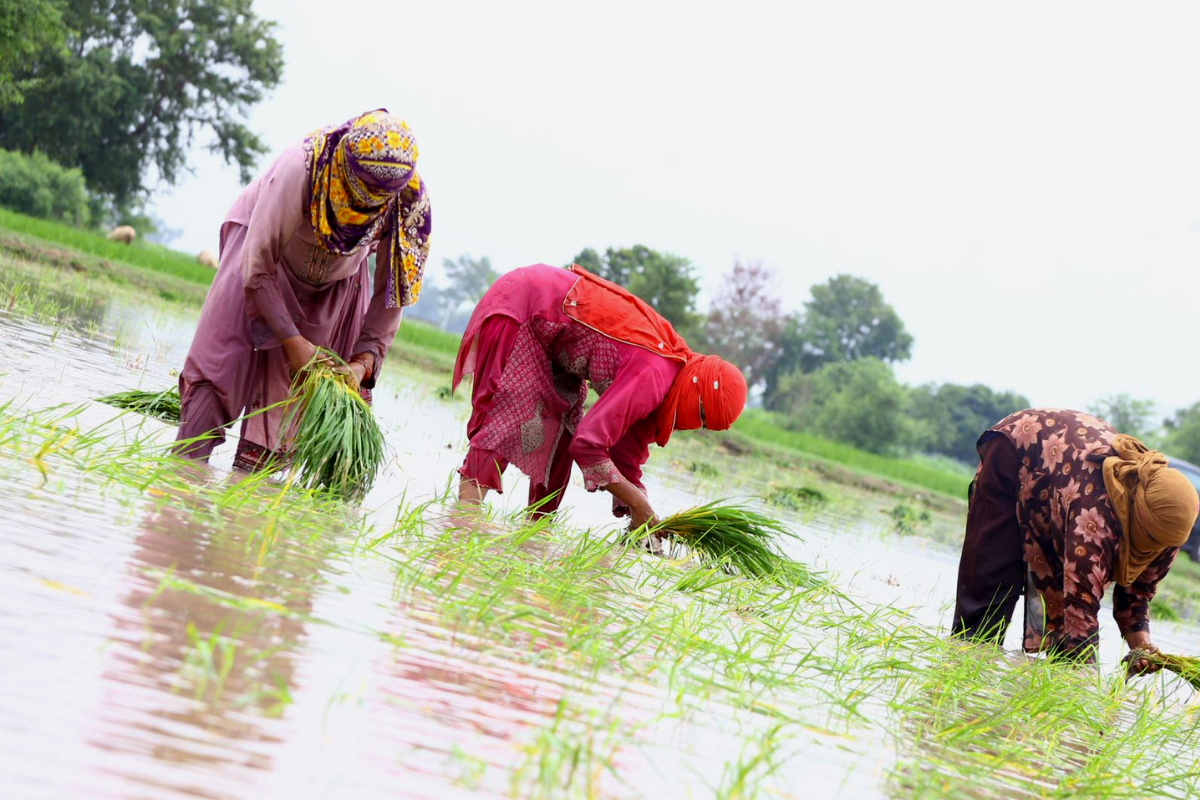
Farmers and workers moving rice plants in Punjab, Pakistan. Photo: Oxfam Pakistan
It is increasingly taken for granted that companies should take responsibility for ensuring a decent life for the farmers and workers who produce their goods. Yet the reality is different. In a unique collaboration, Oxfam brought together the entire supply chain for a specific commodity: Pakistani basmati rice - Axfood in Sweden and UNIL in Norway, importer Rolryz in Poland and exporter Galaxy in Pakistan. The project aimed to increase the income of the small-scale farmers who grew the rice by Axfood and UNIL paying a premium directly to the farmers instead of going through intermediaries. The project ran between 2020 and 2022 and the farmers' incomes increased significantly.
The report shows that a premium can be an effective way to improve the income and livelihoods of small-scale farmers. Testimonies from farmers showed how the premium was appreciated and that it was used for everything from buying seeds to paying for healthcare:
"We farmers are very happy that we received this support. It is the growing season and we needed financial support to buy seeds and fertilizer. We believe that the quality of the rice field will improve."
Farmer who participated in the project, Pakistan
At the same time, Oxfam is also clear that the implementation of premiums will not come without difficulties, but requires careful consideration to succeed. The project is one piece of the puzzle in achieving the goal of more equitable trading systems.
The report presents a number of recommendations for businesses that want to work with living wage:
Focus on those who are most vulnerable. Efforts to increase farmers' incomes can easily focus on those farmers for whom the living wage target is easiest to achieve, i.e. those farmers who already earn the most. This excludes those farmers who are most vulnerable and can make their situation even worse. It is therefore important to take into account the different situations in which farmers live, and not to exclude any group.
Supporting women. Barriers to achieving a living wage are often related to gender discrimination. For example, women in Pakistan have limited access to arable land, limited control over household financial assets and have to deal with harmful gender stereotypes. It is therefore important that projects such as these calculate how women are particularly affected and adapt accordingly.
Getting around fragmentation. Supply chains are often long and complex. It is therefore important to try to shorten the chains and establish relationships directly with the farmers so that the company can know the actual situation.
Invest in long-term trading relationships. Long-term relationships are key for farmers to be able to calculate their income over time and also plan for and invest in their farming in a sustainable way.
Include workers too. Many crops grown by small-scale farmers rely on hired laborers who also need to be able to earn a living wage. Therefore, interventions should calculate a living wage for farmers that also covers wages for workers.
Acting at multiple levels: enabling farmers on a global scale to earn a living requires change across the food sector. It requires the mobilization of multiple actors - governments, businesses and civil society. Businesses can play an important role by collaborating and sharing knowledge with each other, and putting pressure on governments to implement regulations around business and human rights, for example.
Länken är kopierad